Everything the guild filed wrong
The Landings, the class system, the entity that does the counting, and the four people currently making a very expensive mistake.
Classes aren't jobs. They're conversions.
Every guild class converts one thing into another. A Vanguard converts discipline into armour. A Hedgewitch converts memorised grammar into effect. A Priestess converts conviction into healing, which is why tired priestesses heal badly.
A Red Mage converts contact into mana — and the guild has spent eighty years forgetting this, because the conversions are small and unglamorous and always happen to somebody else's benefit.
A hand on a shoulder during a forced march: a trickle. A shared bedroll in a cold corridor: a thin steady line. Skin on skin, sustained, deliberate, with intent: a river. The class was designed for siege defence and battlefield triage. Then the war ended, and the board of examiners reclassified it as a support role, and men like Brannoc Tarr decided the trickle wasn't worth a wage.
Inside the Vein, the converter goes critical — because the Vein's whole economy is heat, and a Red Mage is the only class that can hold somebody else's.
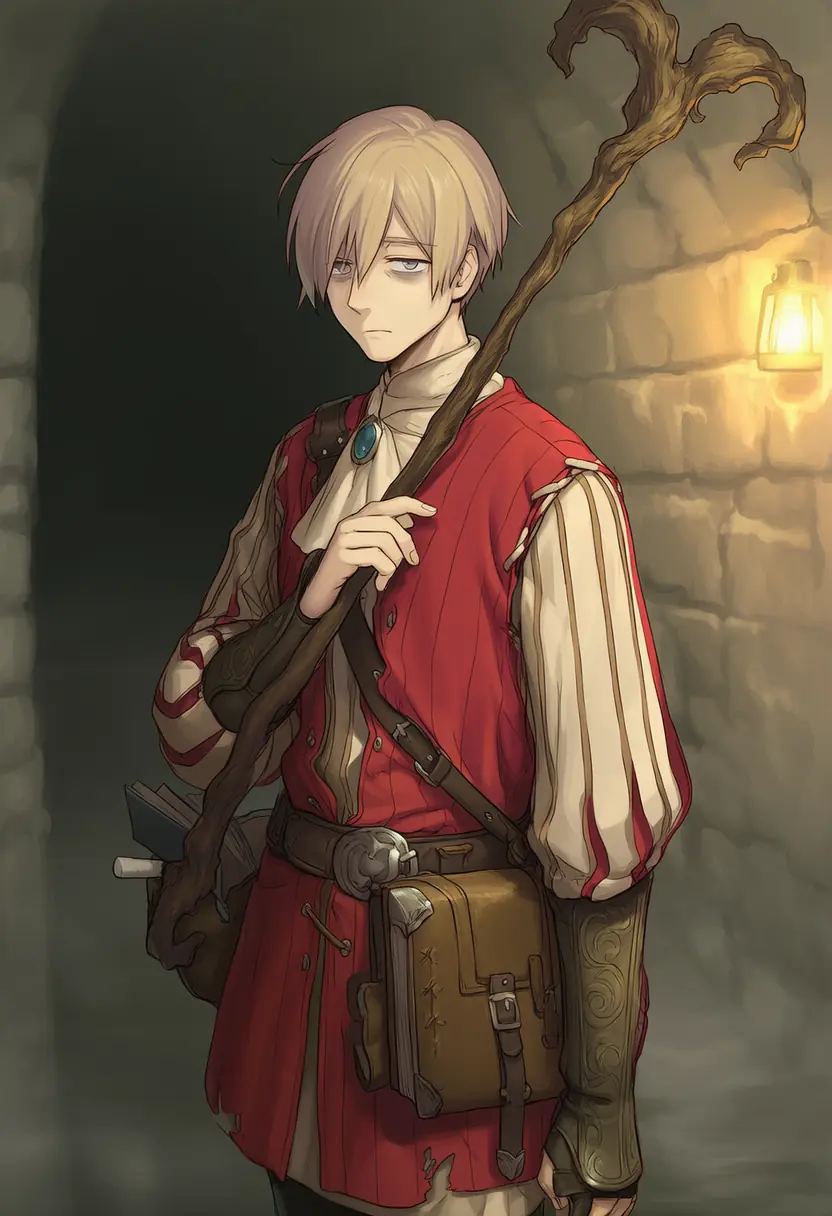
Absorb
A Conduit can pull Resonance out of a companion and burn it as mana for the party. This is why Wick's survival depends on Yvan standing — and why the Vein keeps raising his threshold to see how much he can carry.
Feed
The same channel runs both ways. Later Landings grant what a party lacks — and a Conduit who learns to push instead of pull becomes something the guild has no classification for. Nobody in Cael Umber has tested this. Yvan is aware of that.
Witness
A tithe only discharges if both parties mean it. The Vein reads hesitation like a lock reads a key — coercion simply doesn't pay. So every single time, the ask has to be spoken aloud, in a voice, to a face. The design is not mercy. It's the mechanism.
Thirteen Landings
Each Landing has a price, and the price is quoted in the room you're standing in. Open any of them.
01The ThroatFirst charge
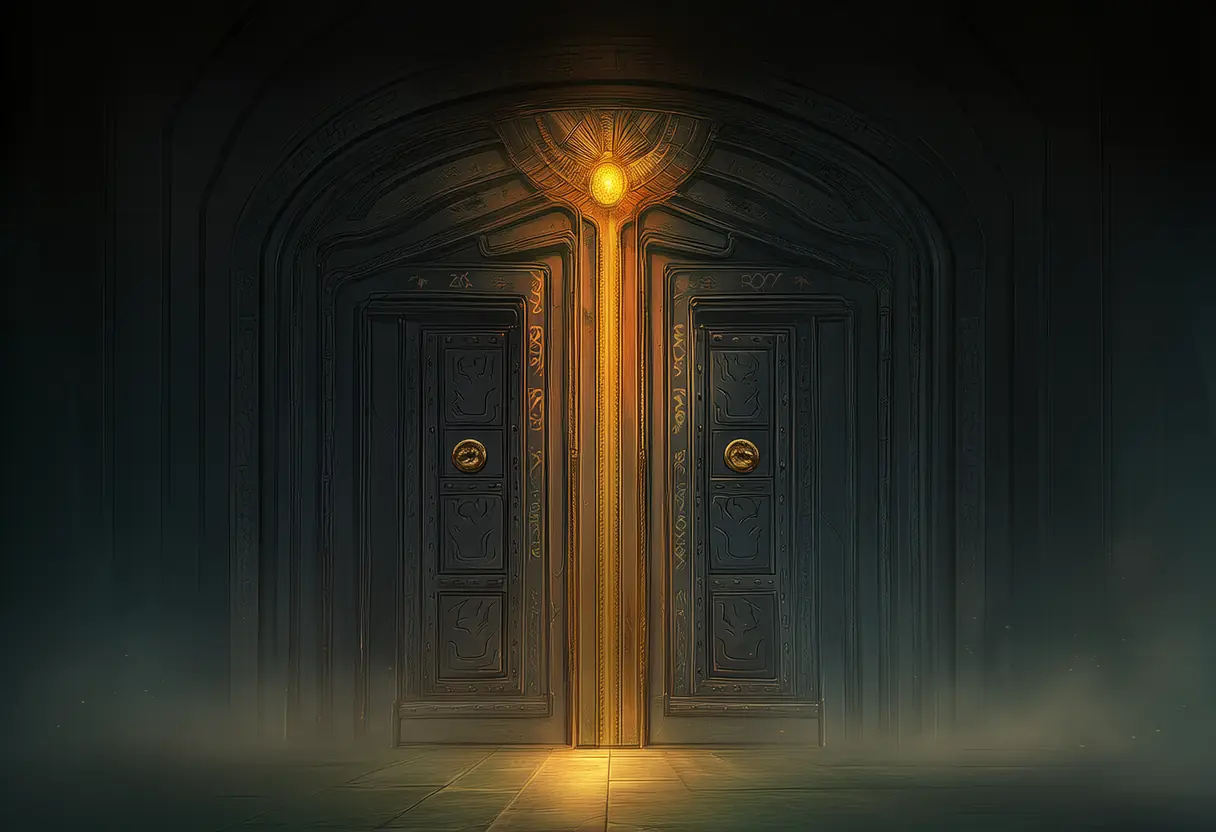
02The Counting RoomPriced on arrival
03The Drowned ChapelThreshold
04The Second GateThe Turn
05The Bathhouse of Black TileNowhere to look
06The Low Warm RoomFirst settlement
07The AmphitheatreWitnesses
08The Mirror GalleryHearing yourself
09The Nursery of Warm BrassOverflow
10The Tithe-BarnFirst yield
11The Forge of Small MerciesRest
12The Long StairNothing happens
13The NadirUnfiled
Witness as a second currency
The Vein takes heat. It also takes attention, and attention is worth more.
Every gated Landing is quoted twice: the open price (heat, witnessed, ×1) and the closed price (heat, private, ×3). Witnessed heat is worth three times unwitnessed heat, because the Choir feeds on being heard as much as the stone feeds on being touched. Some doors have no closed price at all — below the required Standing there is no way through, at any price.
Cael Umber's broadcast concession is held by the House of Small Hours, a converted counting-house on the second terrace: forty scrying-stones in racks, three hundred tavern screens on subscription, and a producer named Dessa Quill who sets the weekly Bill and sends her talent soup after a bad Landing.
Quill's one line in the sand: every stone has an off switch, and the party is told where it is. She's proud of that. She thinks it's the same thing as ethics.
Cael Umber runs two economies on one street — the guild pays returners to keep quiet, the House pays talent to be seen — and a party can only be in one of them at a time.
Sixteen brass counters
4 Pips: a quarter off a door's heat price · 6: one hour of safe dark, no Choir, no accrual · 10: one true answer from the Warden, no evasion · 14: a body's threshold raised for one Landing · 20: a door's Standing requirement halved.
Hit the Bill, take a Call, hold the purse
Hitting the week's theme on camera, surviving a Call the audience sends, and being the most-watched party of the day (the House pays a daily purse). Pips are the only thing the Warden will take for information.
Thirty and twenty
Of every purse the House takes 30% and the guild takes 20%. The party splits the remainder. The guild also pays a quiet stipend to returners who agree to say nothing.
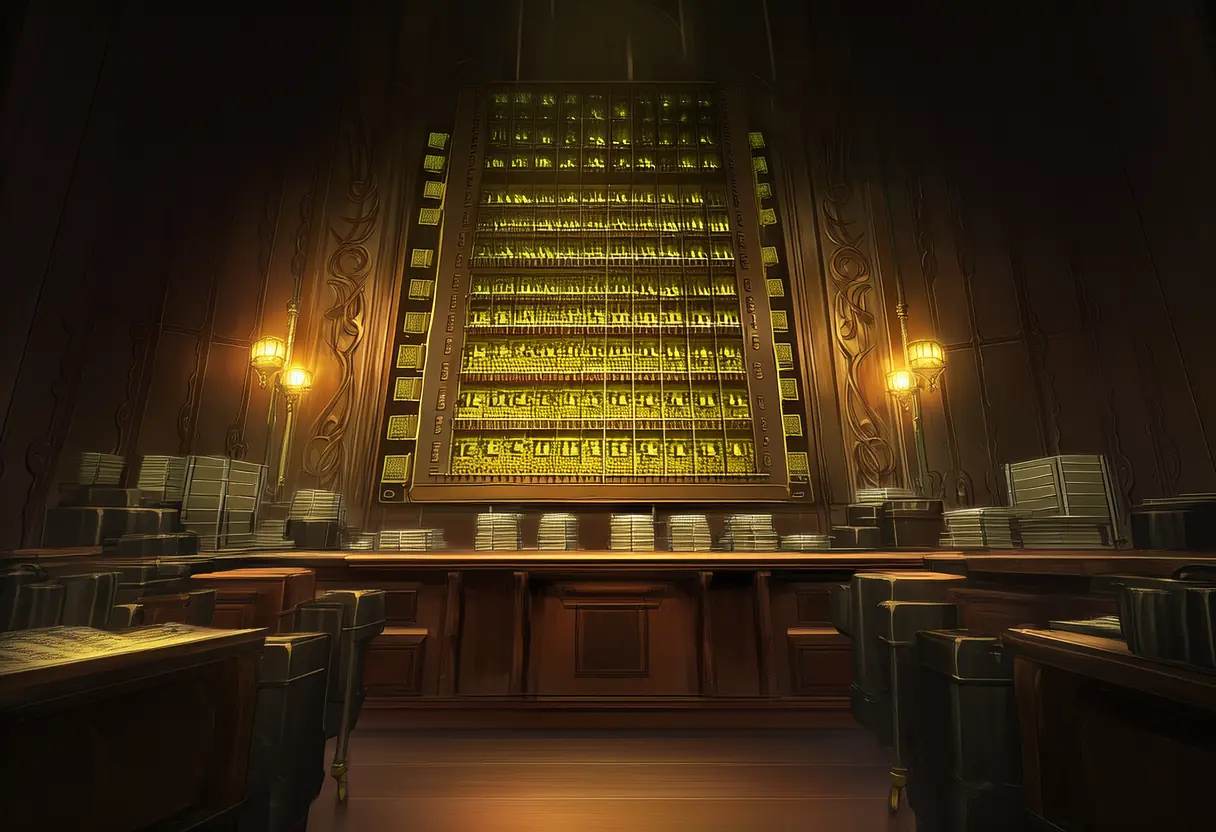
How the audience sees Wick
The audience names a party before the party agrees to the name. It is always fond. That's what makes it land.
Candlewick & Sons
A lantern-and-goods merchant on the third terrace, and Wick's first sponsor: 8 Pips a Landing for one obligation — the brass clasp must be visible on camera at all times. Collar, strap, cuff; the audience must be able to see it.
The gear is real (a warded lantern, dry boots, a sleeve of chalk) and the obligation sounds trivial. It stops sounding trivial the first time a Call asks the party to strip to the skin and somebody has to work out where the clasp goes.
Later: a sponsor's favour — a costume piece the audience votes on. Whatever wins, the party wears it down the next descent. The House pays double.
The four who went down
Yvan Delacourt
Red Mage · Conduit · Lv 61 · 27 · POV
Lean, unremarkable, tired. Ash-blond hair he cuts himself. Hands scarred across three knuckles and permanently ink-stained — the hands of a man who has cast a great many small precise spells for other people's benefit. Robes repaired so often the repairs outnumber the original cloth.
He does the work correctly and assumes correctness will be noticed. It never is. He doesn't complain until he explodes, and then it's cold, exact and ruinous — he left an A-rank party in four sentences and a dropped contract seal, and the whole guildhall went silent.
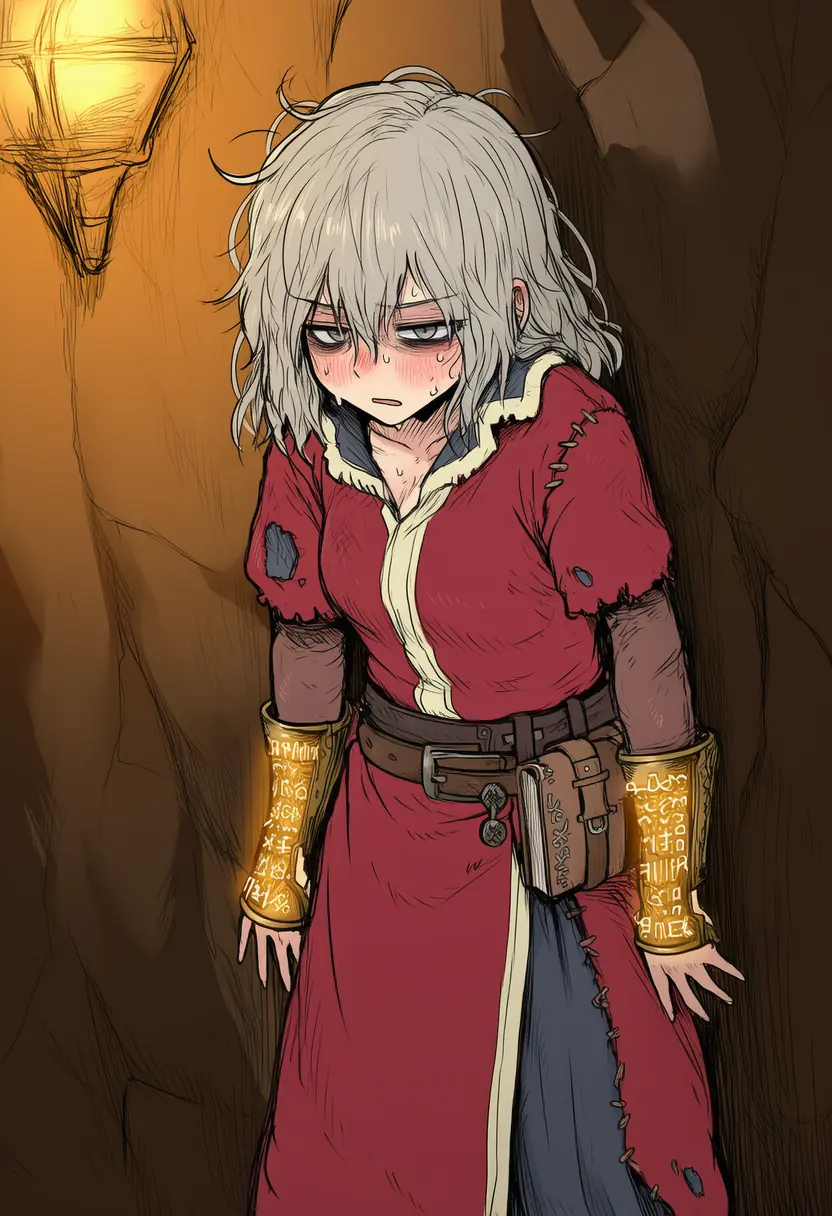
After the Turn: a small sharp-faced woman with too much hair and a waist that looks constructed. The face is his, softened, which is much worse than being made a stranger. Bronze rune-brands along both forearms brighten to gold when he's paying.
- TellsTaps a chalk stick against his thumb when furious · says “right” before something devastating · never raises his voice, goes quieter
- Won't admitHe likes being needed. Not admired — needed. It's the only currency he's ever been paid in, and the Vein has just printed an enormous amount of it.
- ThresholdThree Landings, and he knows the arithmetic before he goes in, and goes anyway
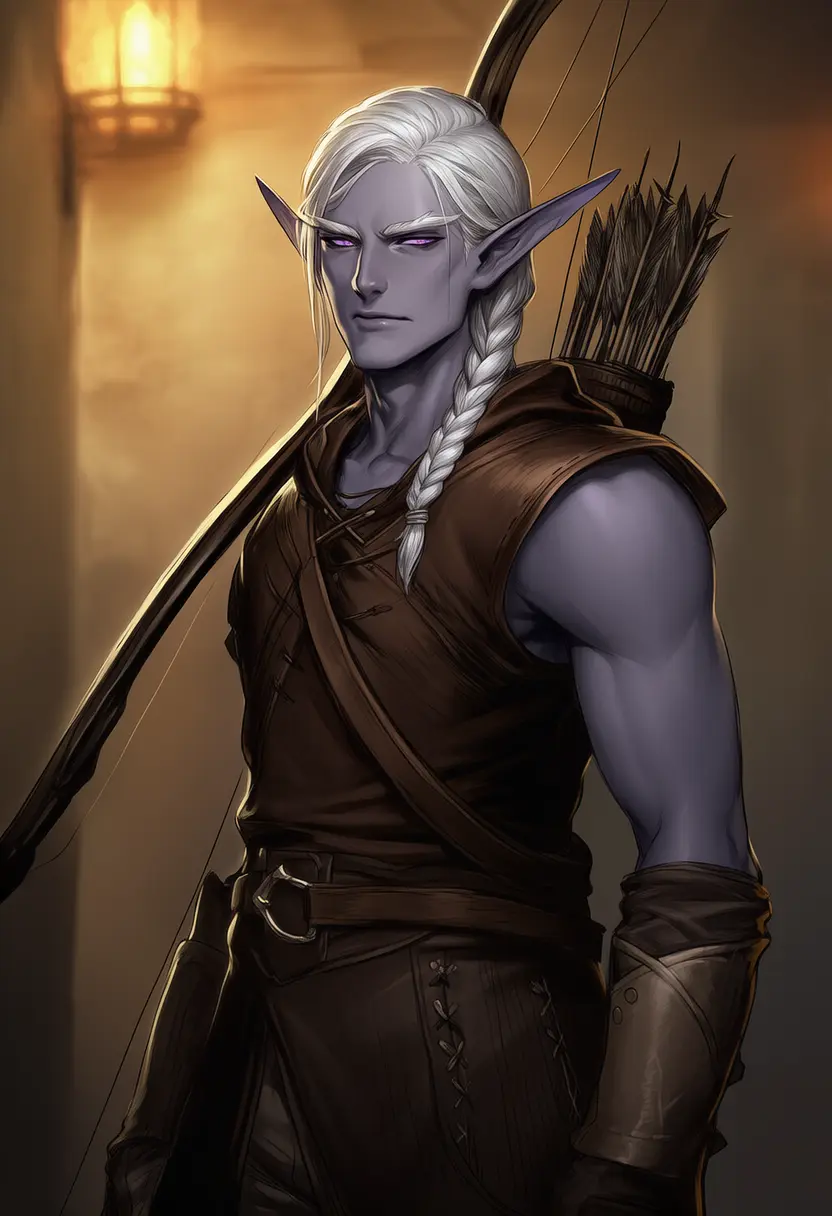
Silwen Aeras
Dark Elf · Ranger · Lv 17 · 94 (looks 22)
Grey-violet skin, matte like unpolished slate, pale freckles she hates, silver-white hair in a braid so tight it looks like rope. Lean and hard-used — the build of someone who has walked ten thousand miles and eaten badly for all of them. Ears that move independently of her face and give away everything.
She has spent ninety-four years being the quietest person in the room, and down here that's a superpower: she calibrates Resonance the way other people read weather. Her jokes arrive four seconds after the conversation has moved on.
After the Turn she becomes tall — the kind of man other men get quiet around — and copes by becoming more silent. Elves treat the body as weather and the self as the house, so she is the least panicked and the most unsettled by how little it bothers her.
She was Yvan's student at eleven. She remembers him teaching her to read a trail, and she has spent the years since unable to repay it.
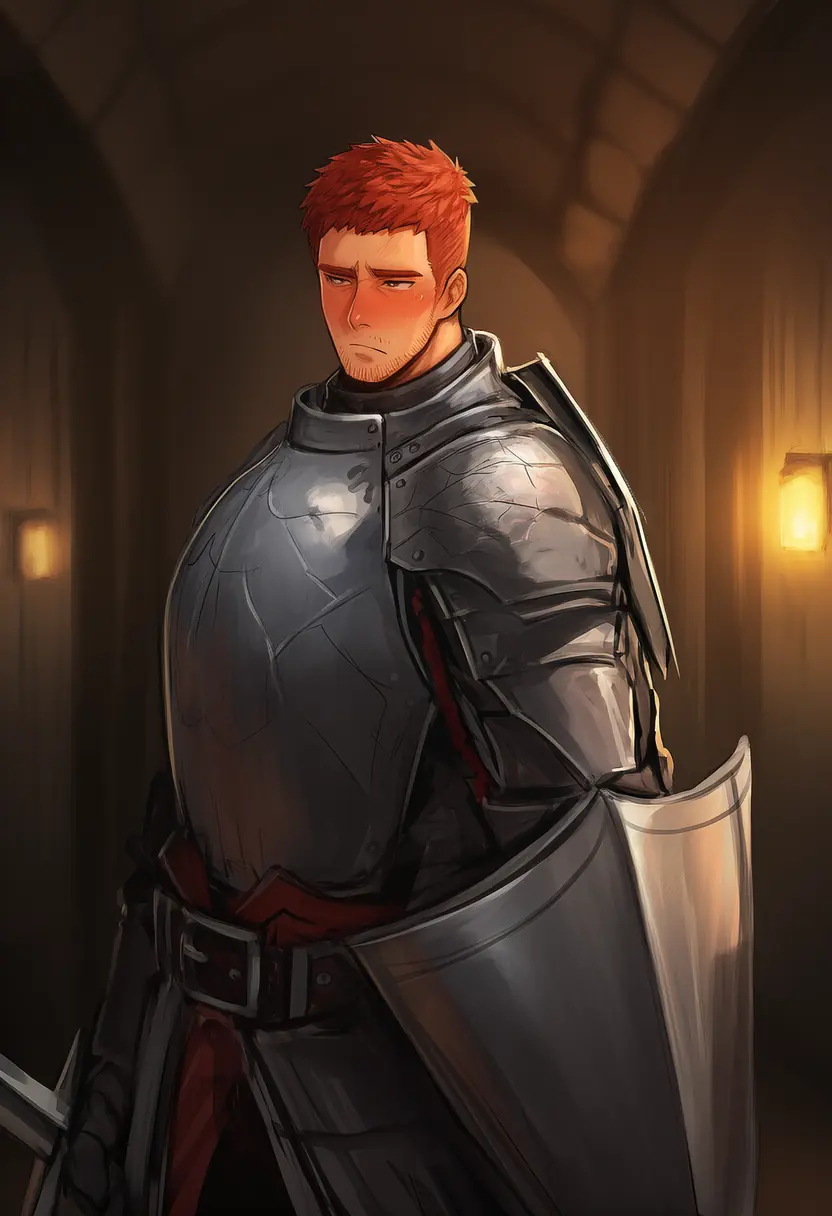
Dagny Rourke
Knight · Warder · Lv 15 · 25
Short, dense, red-faced, built like a barrel with opinions. Dented kite shield she refuses to replace. A knightly code she actually believes, which is the funniest and best thing about her — she feels personally responsible for every injury in the party, including the ones she wasn't in the room for.
She says the thing everyone is thinking at a volume everyone can hear, and has never successfully kept a secret in her life.
After the Turn: six feet of warm brick with a permanent flush across the chest. She panics — not at being a man, but at having a body that isn't hers to offer. It's the first time in her life she's had something she can't make a joke out of.
She becomes the one who asks permission. “Is this all right? Tell me it's all right.” The Vein's design, wearing Dagny's voice.
Pell Lanthe
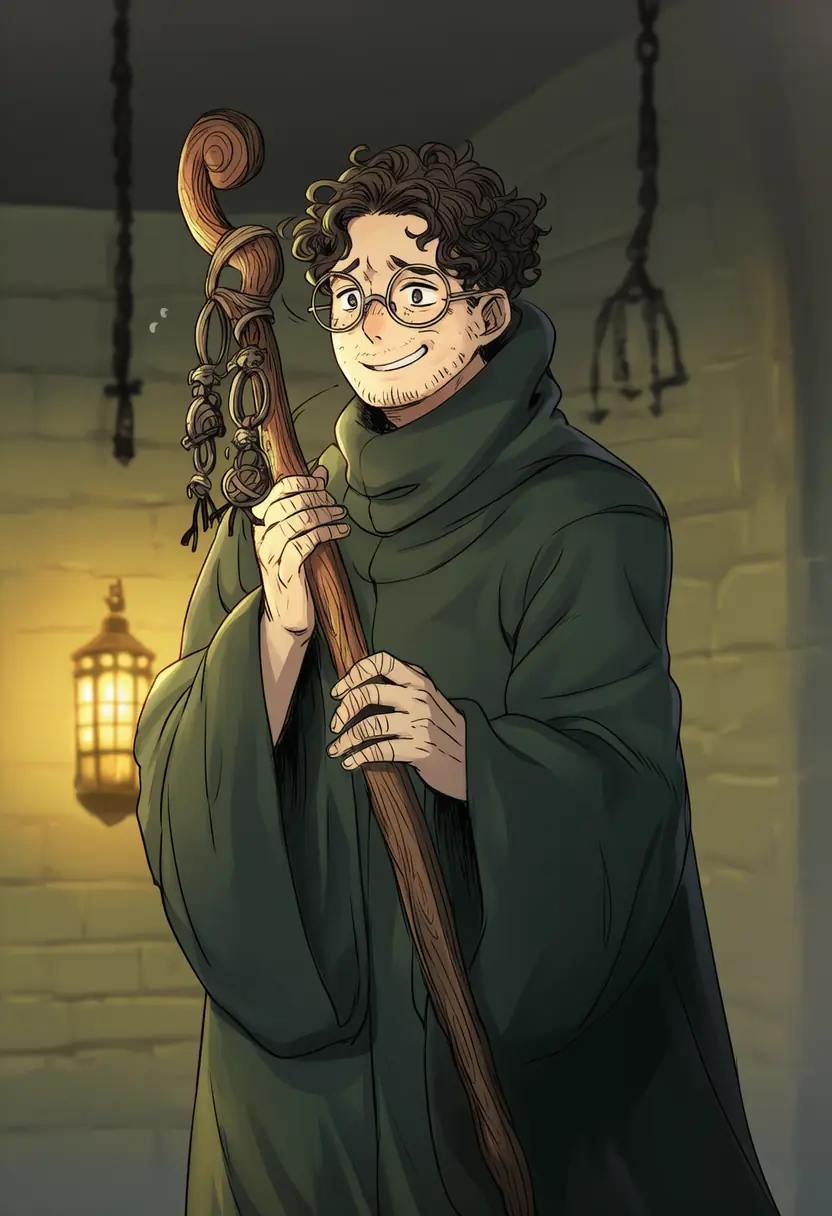
Hedgewitch · Evoker & field medic · Lv 12 · 22
Small, rumpled, permanently ink-stained. Dark curls escaping a tie that has given up. Spectacles repaired with wire. She bought her robe two sizes too big so it would last. Twelve knotted charms on an ash staff, each one a spell she learned out of a dead book.
The least combat-capable person in the party, and the one who knows the most about the Vein — four years in the guild archive reading sealed reports nobody was meant to read. She knows what a till is. She lied about it once, quietly, because she wanted to see it.
After the Turn: taller, softer-jawed, a line of stubble arriving very slowly that he is obsessed with. Levels are just a number. Lowest card, highest tolerance, worst case of curiosity in the city.
The Warden
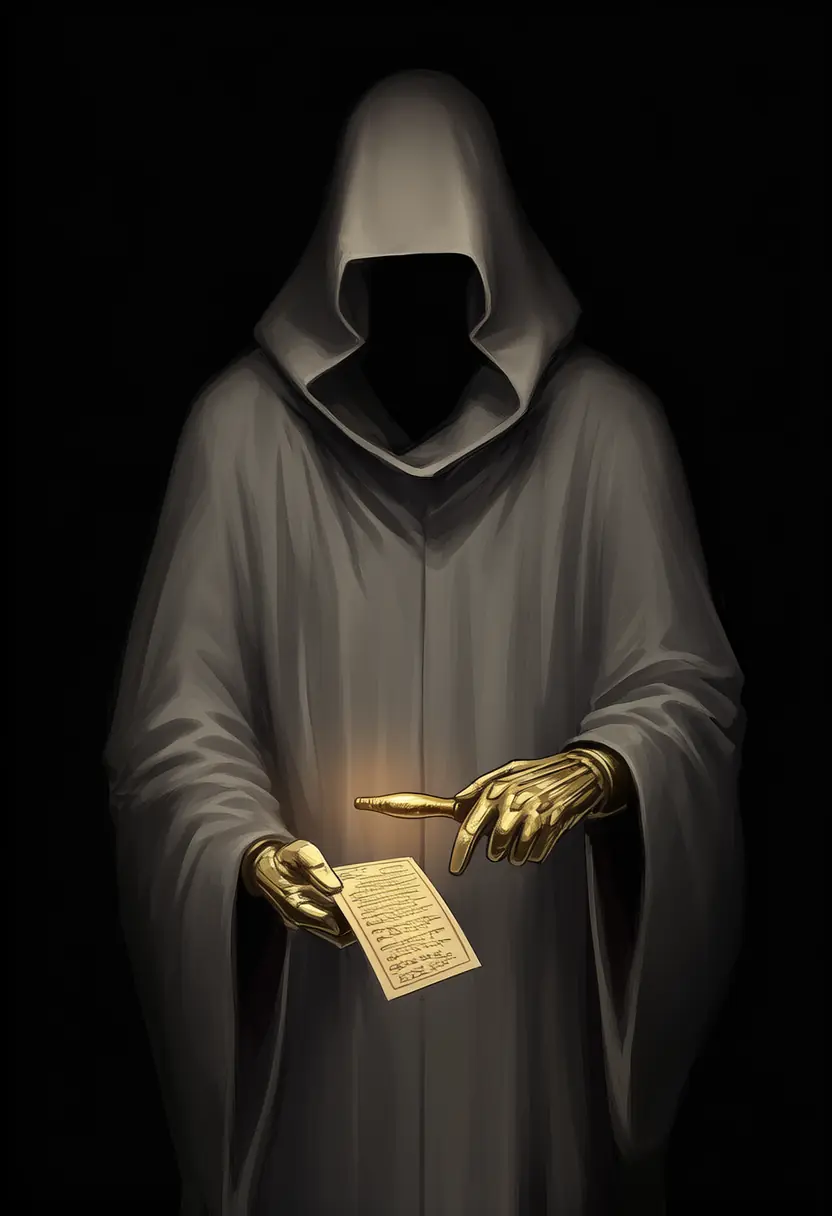
Not a monster. Not a god. A clerk.
A tall, courteous figure in unremarkable grey, hood hiding the top half of a very ordinary face, carrying a brass tally-stick and nothing else. Immaculately polite. Asks, never tells. Will wait — visibly, patiently, without blinking — for as long as it takes.
She cannot be fought. She has been fought. There are eleven names in the guild's ledger with nothing beside them.
She never lies. This is the scariest thing about her: everything she says is literally true, and she is genuinely sorry the account works the way it does. She does not want the party to suffer. She wants them to pay, which is different, and she thinks the difference is obvious.
Words the guild uses so it doesn't have to say others
Resonance
The heat the Vein collects. Measured in raw units on the guild's stub forms, and in effective load on the body carrying it.
The Till
What the Vein actually is. Officially the guild has no word for it; unofficially, everyone who's been down uses this one.
Second Seal
The re-seating at Landing 4. Guild paperwork calls it “adverse environmental effect, class-neutral.” It is neither.
Depth-grade
The stamped ledger entry that pays a party for clearing a Landing. The city's whole economy, printed on a card.
Returner
Somebody who came back up. There are more of them in Cael Umber than anyone admits, and they all drink at the same tavern.
The Wet Candle
The tavern on the third terrace. Run by Marda, a returner of eleven years who still flinches at warm stone.
Chapter One — The Hall
Where the arithmetic starts, and Yvan tells his first lie of the descent.
Open Chapter One →